I always know I’m in for a good session when someone says that their favourite whisky is Monkey Shoulder.1I never ask. It’s always a bit too much “let’s all go round the table and introduce ourselves” if I ask. But sometimes people volunteer. It usually goes “I don’t know a lot about whisky, but one of my favourites is Monkey Shoulder”, to which the response has to be that, actually, you do know quite a bit about whisky, and you’ve already demonstrated impeccable taste. It’s an interesting kind of hybrid and it provokes discussion, like a good whisky should.
Neither a single malt nor a blend, Monkey Shoulder is one of a significantly less common type known in the biz as a blended malt. Let’s recap for those of you who are still catching up:
“This stuff took some poor bastard fifteen years to make, so we are going to sit here and we are damn well going to appreciate it”
–pajh, in most corporate settings
A single malt whisky is the product of a single distillery, produced and matured on that bit of land, redolent with the spirit of the place where it was born and raised. Distilled in a traditional copper pot still and rested in oaken casks to absorb the natural atmospheres. Each one has a unique character and personality all of its own, and when you drink it you should sit down in an armchair and bloody well give it some of your time and attention.
A blended whisky is cheaper, made out of a mixture of whiskies to produce an easy-drinking character. Grain whisky is industrially produced using a continuous distillation process, and it’s bland and uninteresting but—importantly—alcoholic. They stir all of this generic stuff up with some carefully selected single malts to give it some meagre definition, and the resultant product is good for mixing with Coke and tipping down your neck until you fall over.
(dramb.org supports responsible drinking.)
And of course I’m massively oversimplifying, and there are exceptions to all of these rules, or it wouldn’t be the whisky industry.
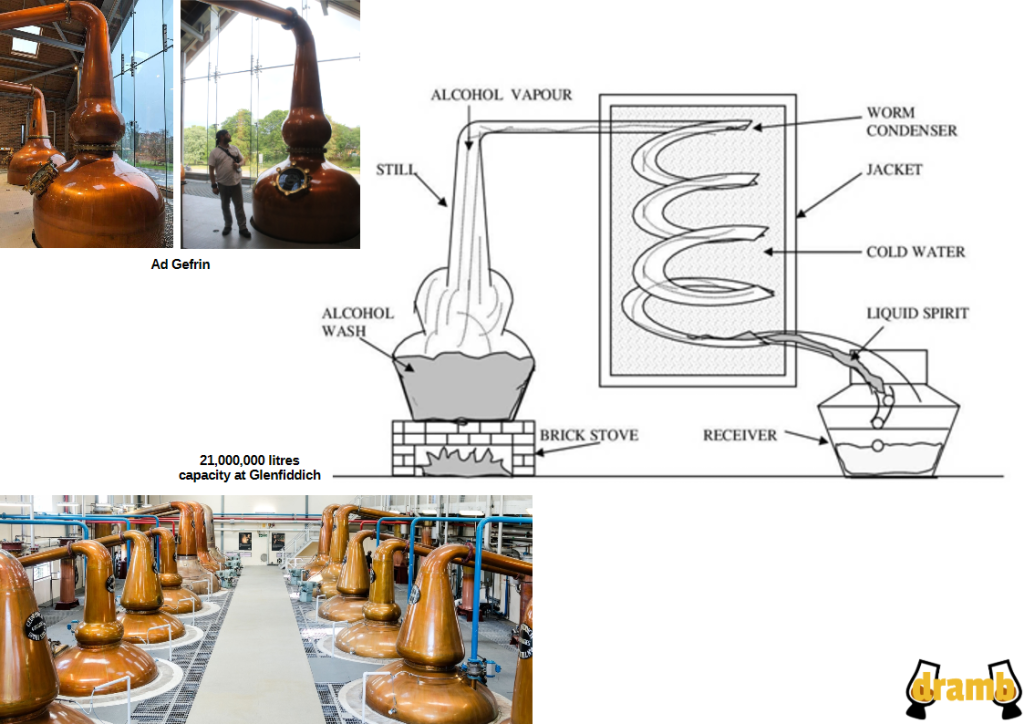

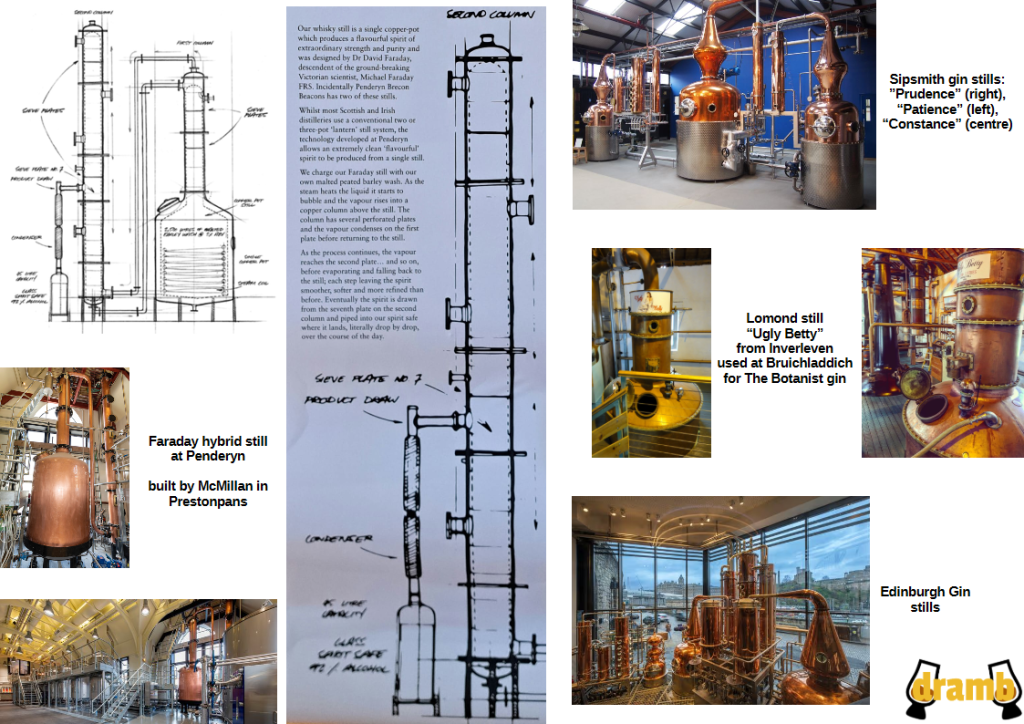
So what’s a blended malt, then, I hear you ask me? Well, that’s simple, I respond, with an affectionate and not at all patronizing head-pat or hair-ruffle as appropriate. A blended malt is a blend exclusively made with single malts, with none of that grain whisky in there. So you can preserve some of that single-malt character and richness, but still produce something with broad appeal that’s fun to drink. Less pretentious but maintaining some respect for the quality and heritage of our beloved spirit.
It’s also significantly easier to distinguish one’s brand inna crowded market, I would assume, but what the hell do I know.
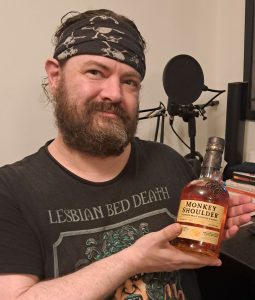
Since I’ve already noted that there are tons of exceptions, here’s one now. Just because you can spend hours savouring the complexities of a single malt doesn’t necessarily mean that you should. Some of them suck. And just because grain whisky is manufactured inna column still on an industrial estate doesn’t mean that the product can’t be fantastic and (rarely, but sometimes) deserve equal amounts of your care and attention. Some of them are spectacular. There’s no room for snobbery in this game.
And when you’re a nerd, like me, it’s always worth going through the motions properly, and doing a full tasting, to make sure that you’re getting as much of an experience out of the bottle as you can. Even if it’s shite, at least you can say you’ve tried it.
So this bottle popped up on special offer in the Co-op, and it’s time to pay it some respects.
Developed in the mid-oughts as a blend of Glenfiddich, Balvenie, and Kininvie malts2Three single malt distilleries owned by Wm Grant & Sons that are all conveniently on the same site in Speyside., Monkey Shoulder quickly established itself a reputation as a smooth, caramel-forward dram with a classic Speyside character. A few years later, Grants stopped specifying the ingredients3Conveniently at around the time that their new grain distillery came online at Ailsa Bay, I might observe, if I wanted to be suspicious., which gives them scope to bugger around with the formulation a bit, but it’s still described and marketed as a blend of exclusively single malts.
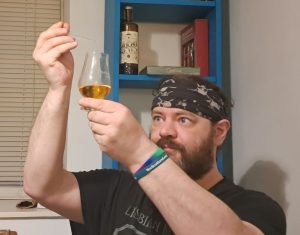
We noticed that the flavour profile does seem to have changed fairly substantially since the last time I tried this one.
Meadow fresh on the nose with a distinct sweetness, and some initial notes of oak and fresh ginger. Very faint in the background but impossible to ignore, there was a tiny hint of wintergreen. We couldn’t detect any of that celebrated caramel, but instead there was a really pronounced flavour of a very dark hard-crack toffee. Combined with a persistent hint of macadamia, the whole thing gave off a very brazil-nut toffee vibe. But very clean, fresh, and with a warming afterglow.
A drop of water brought the vanilla notes out, cooked sugars, and turned the fresh ginger note into ground. A few buttery and treacly notes came through, a hint of acetone, and there was that bright confectioners-sugar aroma throughout, which I normally associate with grain whiskies,4::raises eyebrows significantly in the direction of the previous footnote:: so the whole thing gave off an air of a Victorian sweetshop.
My tasting partner was insistent that there were notes of ylang ylang after adding the water, to which I can only bow to her greater expertise.
Different, then, to how it tasted a few years ago, but a bloody brilliant dram nonetheless. And if you can find it for £25 like I did then you have absolutely no excuse.
Footnotes
- 1I never ask. It’s always a bit too much “let’s all go round the table and introduce ourselves” if I ask. But sometimes people volunteer. ↩︎
- 2Three single malt distilleries owned by Wm Grant & Sons that are all conveniently on the same site in Speyside. ↩︎
- 3Conveniently at around the time that their new grain distillery came online at Ailsa Bay, I might observe, if I wanted to be suspicious. ↩︎
- 4::raises eyebrows significantly in the direction of the previous footnote:: ↩︎