On blends and brands (feat. Monkey Shoulder)

I always know I’m in for a good session when someone says that their favourite whisky is Monkey Shoulder.1I never ask. It’s always a bit too much “let’s all go round the table and introduce ourselves” if I ask. But sometimes people volunteer. It usually goes “I don’t know a lot about whisky, but one of my favourites is Monkey Shoulder”, to which the response has to be that, actually, you do know quite a bit about whisky, and you’ve already demonstrated impeccable taste. It’s an interesting kind of hybrid and it provokes discussion, like a good whisky should.

Neither a single malt nor a blend, Monkey Shoulder is one of a significantly less common type known in the biz as a blended malt. Let’s recap for those of you who are still catching up:

“This stuff took some poor bastard fifteen years to make, so we are going to sit here and we are damn well going to appreciate it”

–pajh, in most corporate settings

A single malt whisky is the product of a single distillery, produced and matured on that bit of land, redolent with the spirit of the place where it was born and raised. Distilled in a traditional copper pot still and rested in oaken casks to absorb the natural atmospheres. Each one has a unique character and personality all of its own, and when you drink it you should sit down in an armchair and bloody well give it some of your time and attention.

A blended whisky is cheaper, made out of a mixture of whiskies to produce an easy-drinking character. Grain whisky is industrially produced using a continuous distillation process, and it’s bland and uninteresting but—importantly—alcoholic. They stir all of this generic stuff up with some carefully selected single malts to give it some meagre definition, and the resultant product is good for mixing with Coke and tipping down your neck until you fall over.

(dramb.org supports responsible drinking.)

And of course I’m massively oversimplifying, and there are exceptions to all of these rules, or it wouldn’t be the whisky industry.
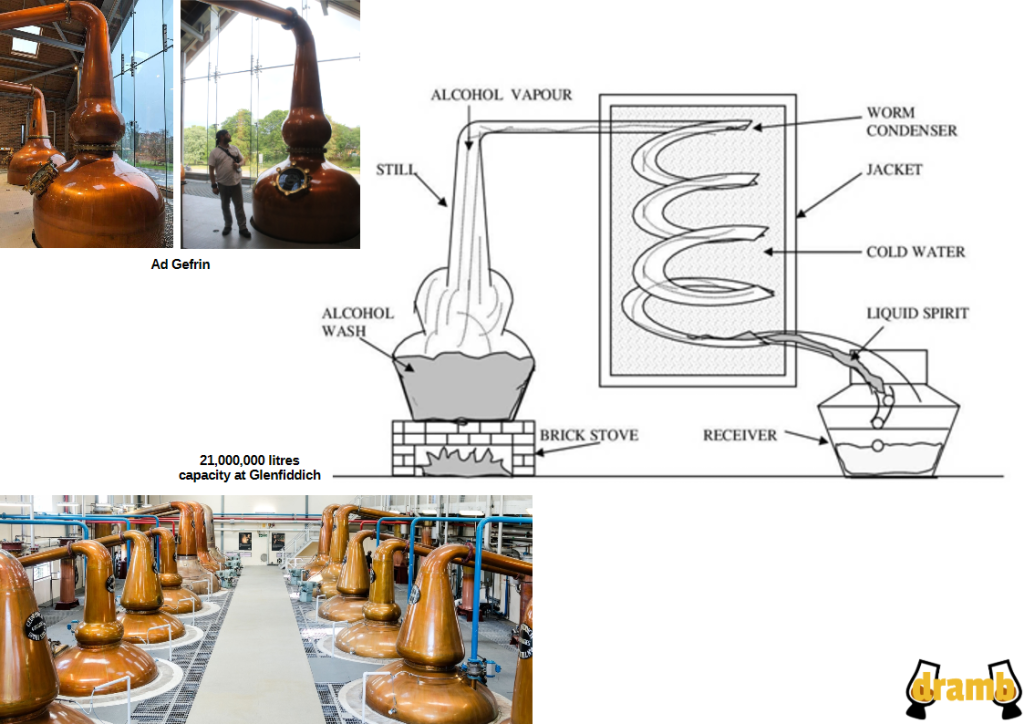

So what’s a blended malt, then, I hear you ask me? Well, that’s simple, I respond, with an affectionate and not at all patronizing head-pat or hair-ruffle as appropriate. A blended malt is a blend exclusively made with single malts, with none of that grain whisky in there. So you can preserve some of that single-malt character and richness, but still produce something with broad appeal that’s fun to drink. Less pretentious but maintaining some respect for the quality and heritage of our beloved spirit.

It’s also significantly easier to distinguish one’s brand inna crowded market, I would assume, but what the hell do I know.

pajh with Monkey Shoulder

Since I’ve already noted that there are tons of exceptions, here’s one now. Just because you can spend hours savouring the complexities of a single malt doesn’t necessarily mean that you should. Some of them suck. And just because grain whisky is manufactured inna column still on an industrial estate doesn’t mean that the product can’t be fantastic and (rarely, but sometimes) deserve equal amounts of your care and attention. Some of them are spectacular. There’s no room for snobbery in this game.

And when you’re a nerd, like me, it’s always worth going through the motions properly, and doing a full tasting, to make sure that you’re getting as much of an experience out of the bottle as you can. Even if it’s shite, at least you can say you’ve tried it.

So this bottle popped up on special offer in the Co-op, and it’s time to pay it some respects.

Developed in the mid-oughts as a blend of Glenfiddich, Balvenie, and Kininvie malts2Three single malt distilleries owned by Wm Grant & Sons that are all conveniently on the same site in Speyside., Monkey Shoulder quickly established itself a reputation as a smooth, caramel-forward dram with a classic Speyside character. A few years later, Grants stopped specifying the ingredients3Conveniently at around the time that their new grain distillery came online at Ailsa Bay, I might observe, if I wanted to be suspicious., which gives them scope to bugger around with the formulation a bit, but it’s still described and marketed as a blend of exclusively single malts.

pajh tasting Monkey Shoulder
Doing it right

We noticed that the flavour profile does seem to have changed fairly substantially since the last time I tried this one.

Meadow fresh on the nose with a distinct sweetness, and some initial notes of oak and fresh ginger. Very faint in the background but impossible to ignore, there was a tiny hint of wintergreen. We couldn’t detect any of that celebrated caramel, but instead there was a really pronounced flavour of a very dark hard-crack toffee. Combined with a persistent hint of macadamia, the whole thing gave off a very brazil-nut toffee vibe. But very clean, fresh, and with a warming afterglow.

A drop of water brought the vanilla notes out, cooked sugars, and turned the fresh ginger note into ground. A few buttery and treacly notes came through, a hint of acetone, and there was that bright confectioners-sugar aroma throughout, which I normally associate with grain whiskies,4::raises eyebrows significantly in the direction of the previous footnote:: so the whole thing gave off an air of a Victorian sweetshop.

My tasting partner was insistent that there were notes of ylang ylang after adding the water, to which I can only bow to her greater expertise.

Different, then, to how it tasted a few years ago, but a bloody brilliant dram nonetheless. And if you can find it for £25 like I did then you have absolutely no excuse.

Footnotes

  • 1
    I never ask. It’s always a bit too much “let’s all go round the table and introduce ourselves” if I ask. But sometimes people volunteer.
  • 2
    Three single malt distilleries owned by Wm Grant & Sons that are all conveniently on the same site in Speyside.
  • 3
    Conveniently at around the time that their new grain distillery came online at Ailsa Bay, I might observe, if I wanted to be suspicious.
  • 4
    ::raises eyebrows significantly in the direction of the previous footnote::

On Scotland’s rich gin-dustrial heritage

Waggonway gin tasting
Fun was had by all.

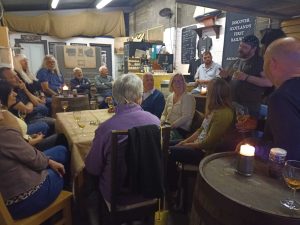
That was fun. In something of a departure from our usual fare, this weekend featured our inaugural gin tasting session, in collaboration with our good friends at the 1722 Waggonway Heritage Centre.

Five carefully selected Scottish gins, each served with a recommended mixer and some of yr. corresp.’s signature well-informed chat. (We initially picked out four bottles, and then a very welcome last-minute donation of a fifth gin forced me to recompose my entire planned spiel.) Since this was a beginner-level session I concentrated on modern London Dry-style gins with a local Scottish twist, but of course I had to include Lindores for the historical aspect, given the venue.

We wisely dispensed with all the “gin o’clock” and “let the evening be-gin” gags in the first five minutes and thus could get down to some serious gustatory experiencing. I walked everyone through the usual tasting process, using dehydrated fruit garnishes so that the flavours would percolate into the spirit over the course of a few minutes.

It wouldn’t be a proper dramb tasting session unless I managed to hydrolyze some esters somewhere along the line.

gin display
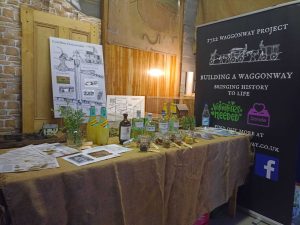
My epic gin display table

And then it was into my favourite part of the evening: Laboratory Tyme! Newly inspired to fresh creative heights and a deeper understanding of the complexities of flavour profiles and pairings, everyone descended upon the bar to develop their own combinations. Some of the results were excellent. I was particularly fond of a few examples that completely recontextualized the original spirit.

I wouldn’t normally recommend an activity like this with a whisky tasting session—particularly at an introductory level, where people are frequently looking for something a bit more regimented. But the more open nature of gin really lent itself to a more experimental kind of event, combined with the fact that I was running a gin evening for the first time.

One thing I learned very quickly, very early on in my career as an experience developer, was that you have to trust people. It’s their event and they know how to enjoy themselves. I’m there to provide the expertise and enough guidance to let the evening run, but—crucially—no more than that. This was a great example of a session filled with great people who really turned the night into their own.

One new lesson that I picked up as a result: spending three days dehydrating grapefruit wheels1Ten hours per batch inna domestic oven. A proper dehydrator is going on the amazon wishlist. was totally worth it, but unless it’s for another charity fundraiser, next time I’m charging extra.

Here’s the running order:

Lindores Aqua Vitae

Lindores aqua vitae

This common ancestor to both whisky and gin has a fascinating history and a really unique, medieval, medicinal flavour profile, herbal and warming.

Key botanicals: cleavers, sweet cicely

Recommended serve: orange wheel and ginger ale

Our findings from Laboratory Tyme: the recommended serve was deliciously warming but it got everyone thinking of Christmas. For midsummer, keeping the orange but substituting tonic for the ginger ale made for a much lighter, zingier drink.

The Botanist gin

The Botanist

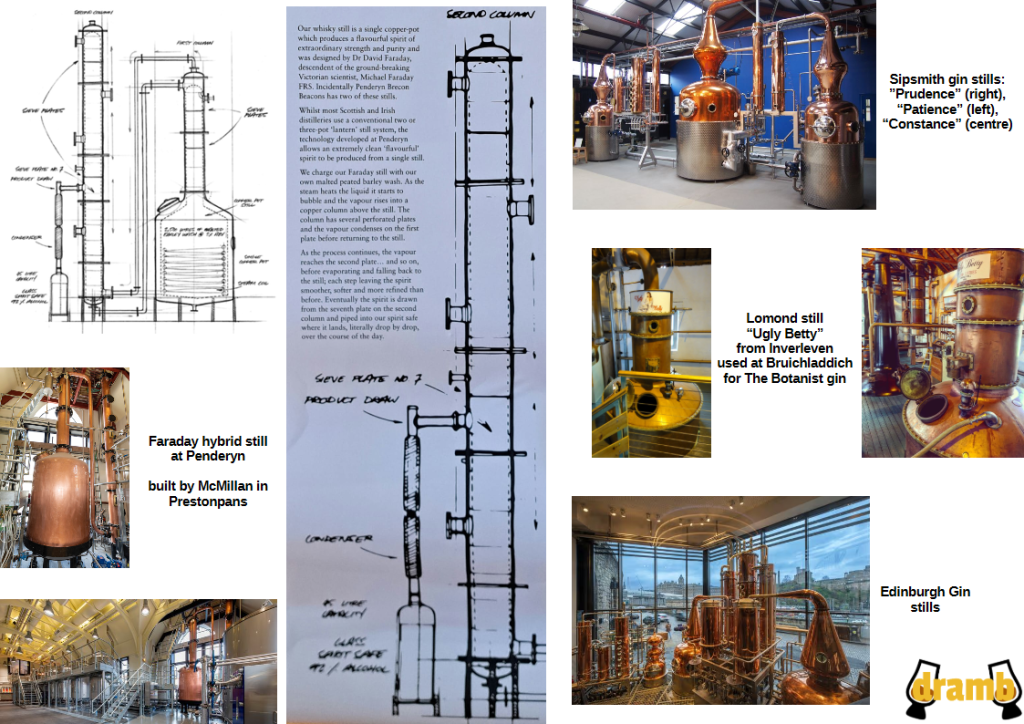
Bruichladdich’s adroit take on the London Dry, with a whole ton of botanicals crammed in there.2Alongside nine of the more traditional gin botanicals they have twenty-two local ones. They employ two full-time foragers at Bruichladdich and I can’t say I’m surprised. A modern classic.

Key botanicals: most of them, but elderflower, gorse, meadowsweet, and mugwort stood out

Recommended serve: pink grapefruit and tonic

Our findings from Laboratory Tyme: a sprig of rosemary really added another layer to this one.

caorunn

Caorunn

A much wetter style for contrast, but still technically a London Dry. Hugely popular amongst the group.

Key botanicals: rowanberry and Coul Blush apples

Recommended serve: red apple and tonic

Our findings from Laboratory Tyme: as well as adding a frisson to the drink, the gin-infused apple slices were brilliant afterwards.

Edinburgh Seaside gin

Edinburgh “Seaside”

Long has this been a favourite at casa dramb, so it was a very pleasant surprise to have this added to the lineup at the last minute (thanks Ed!). A great choice, too, since it was brand new to a lot of folk at waggonway. Beautiful fresh summery coastal notes, perfect for the location.

Key botanicals: bladderwrack, scurvy grass, and ground ivy

Recommended serve: tonic, grapefruit and thyme

Our findings from Laboratory Tyme: we started with a more traditional lime-and-tonic pairing, which was beautiful as always, but the addition of fresh thyme was a gamechanger.

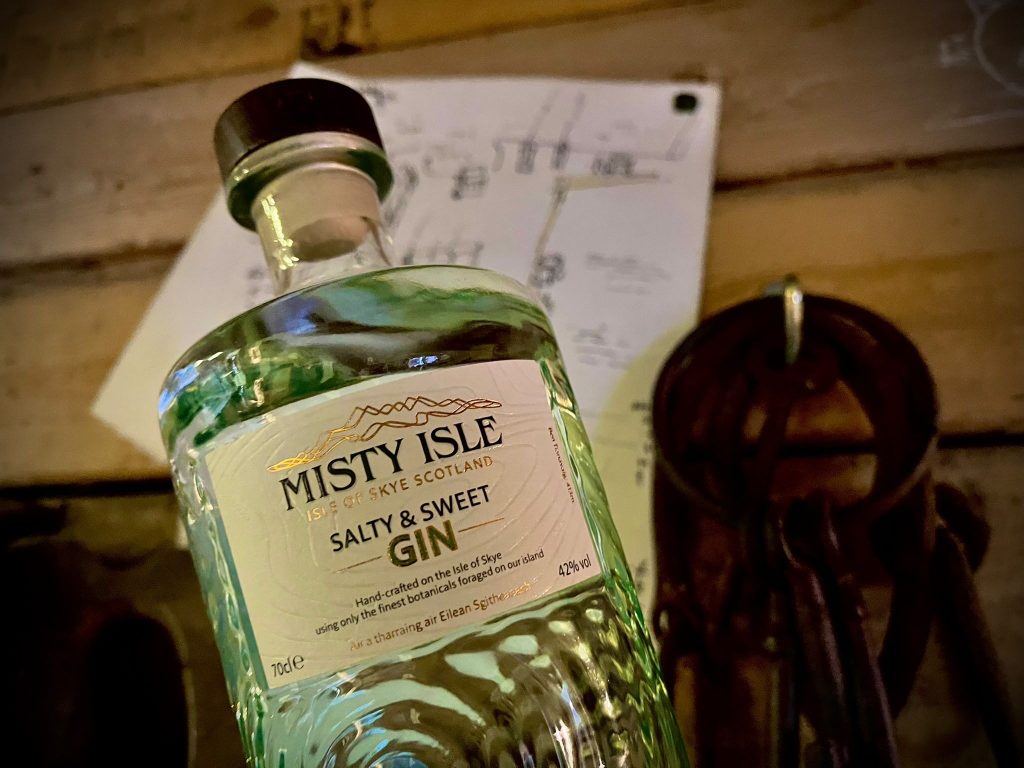
Misty Isle "salty & sweet" gin

Misty Isle “salty & sweet”

Given the importance of the local salt panning industry to the history of the Waggonway, and the heritage project’s ongoing ventures in preservation of the craft, we felt it was only right to include something salty for dessert. And everybody bloody adored it.

Key botanicals: blueberries, meadowsweet, and sea orache

Recommended serve: Scottish tonic and lemon peel

Our findings from Laboratory Tyme: bitter lemon. Suddenly all the sweet notes were highlighted and the whole thing tasted like a lemon posset. Gorgeous.

It turned out to be a lot more difficult than I expected to source bitter lemon for the mixers table. It seems to be falling out of fashion in the smaller and medium-sized supermarkets, as if it’s a relic of the 1980s. Certainly in my entire quarter-century career as a bartender, I’ve never once served a bitter lemon alongside a gin—only ever as one half of a St Clements. Given how marvellously it worked with several of this evening’s bottles (especially the Misty Isle), I say it’s time to bring it back. Does anyone know if bitter lemon counts as one of your five-a-day?

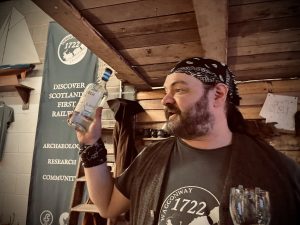
pajh in gin mode
pajh in full declamatory gin-fuelled style

Coming up next on the Waggonway’s events calendar is this talk by Elizabeth Ewan, For Whatever Ales Ye: Women and Brewing in Sixteenth-Century Scotland, which I’m really looking forward to. And as ever I’m available to book for your own event if you’d like to join the party.

Footnotes

  • 1
    Ten hours per batch inna domestic oven. A proper dehydrator is going on the amazon wishlist.
  • 2
    Alongside nine of the more traditional gin botanicals they have twenty-two local ones. They employ two full-time foragers at Bruichladdich and I can’t say I’m surprised.