On blends and brands (feat. Monkey Shoulder)

I always know I’m in for a good session when someone says that their favourite whisky is Monkey Shoulder.1I never ask. It’s always a bit too much “let’s all go round the table and introduce ourselves” if I ask. But sometimes people volunteer. It usually goes “I don’t know a lot about whisky, but one of my favourites is Monkey Shoulder”, to which the response has to be that, actually, you do know quite a bit about whisky, and you’ve already demonstrated impeccable taste. It’s an interesting kind of hybrid and it provokes discussion, like a good whisky should.

Neither a single malt nor a blend, Monkey Shoulder is one of a significantly less common type known in the biz as a blended malt. Let’s recap for those of you who are still catching up:

“This stuff took some poor bastard fifteen years to make, so we are going to sit here and we are damn well going to appreciate it”

–pajh, in most corporate settings

A single malt whisky is the product of a single distillery, produced and matured on that bit of land, redolent with the spirit of the place where it was born and raised. Distilled in a traditional copper pot still and rested in oaken casks to absorb the natural atmospheres. Each one has a unique character and personality all of its own, and when you drink it you should sit down in an armchair and bloody well give it some of your time and attention.

A blended whisky is cheaper, made out of a mixture of whiskies to produce an easy-drinking character. Grain whisky is industrially produced using a continuous distillation process, and it’s bland and uninteresting but—importantly—alcoholic. They stir all of this generic stuff up with some carefully selected single malts to give it some meagre definition, and the resultant product is good for mixing with Coke and tipping down your neck until you fall over.

(dramb.org supports responsible drinking.)

And of course I’m massively oversimplifying, and there are exceptions to all of these rules, or it wouldn’t be the whisky industry.

So what’s a blended malt, then, I hear you ask me? Well, that’s simple, I respond, with an affectionate and not at all patronizing head-pat or hair-ruffle as appropriate. A blended malt is a blend exclusively made with single malts, with none of that grain whisky in there. So you can preserve some of that single-malt character and richness, but still produce something with broad appeal that’s fun to drink. Less pretentious but maintaining some respect for the quality and heritage of our beloved spirit.

It’s also significantly easier to distinguish one’s brand inna crowded market, I would assume, but what the hell do I know.

pajh with Monkey Shoulder

Since I’ve already noted that there are tons of exceptions, here’s one now. Just because you can spend hours savouring the complexities of a single malt doesn’t necessarily mean that you should. Some of them suck. And just because grain whisky is manufactured inna column still on an industrial estate doesn’t mean that the product can’t be fantastic and (rarely, but sometimes) deserve equal amounts of your care and attention. Some of them are spectacular. There’s no room for snobbery in this game.

And when you’re a nerd, like me, it’s always worth going through the motions properly, and doing a full tasting, to make sure that you’re getting as much of an experience out of the bottle as you can. Even if it’s shite, at least you can say you’ve tried it.

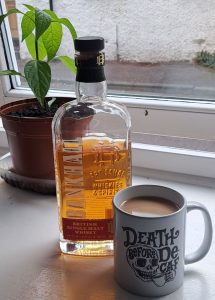
So this bottle popped up on special offer in the Co-op, and it’s time to pay it some respects.

Developed in the mid-oughts as a blend of Glenfiddich, Balvenie, and Kininvie malts2Three single malt distilleries owned by Wm Grant & Sons that are all conveniently on the same site in Speyside., Monkey Shoulder quickly established itself a reputation as a smooth, caramel-forward dram with a classic Speyside character. A few years later, Grants stopped specifying the ingredients3Conveniently at around the time that their new grain distillery came online at Ailsa Bay, I might observe, if I wanted to be suspicious., which gives them scope to bugger around with the formulation a bit, but it’s still described and marketed as a blend of exclusively single malts.

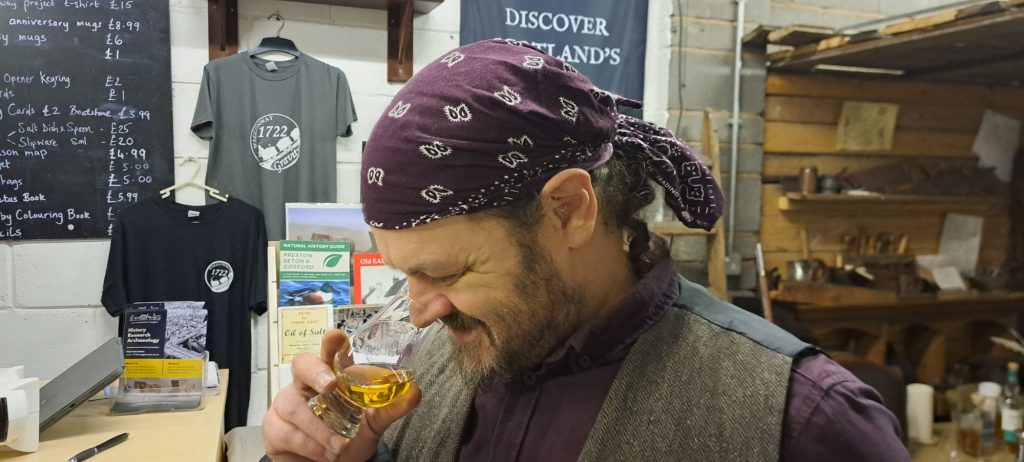
pajh tasting Monkey Shoulder
Doing it right

We noticed that the flavour profile does seem to have changed fairly substantially since the last time I tried this one.

Meadow fresh on the nose with a distinct sweetness, and some initial notes of oak and fresh ginger. Very faint in the background but impossible to ignore, there was a tiny hint of wintergreen. We couldn’t detect any of that celebrated caramel, but instead there was a really pronounced flavour of a very dark hard-crack toffee. Combined with a persistent hint of macadamia, the whole thing gave off a very brazil-nut toffee vibe. But very clean, fresh, and with a warming afterglow.

A drop of water brought the vanilla notes out, cooked sugars, and turned the fresh ginger note into ground. A few buttery and treacly notes came through, a hint of acetone, and there was that bright confectioners-sugar aroma throughout, which I normally associate with grain whiskies,4::raises eyebrows significantly in the direction of the previous footnote:: so the whole thing gave off an air of a Victorian sweetshop.

My tasting partner was insistent that there were notes of ylang ylang after adding the water, to which I can only bow to her greater expertise.

Different, then, to how it tasted a few years ago, but a bloody brilliant dram nonetheless. And if you can find it for £25 like I did then you have absolutely no excuse.

Footnotes

  • 1
    I never ask. It’s always a bit too much “let’s all go round the table and introduce ourselves” if I ask. But sometimes people volunteer.
  • 2
    Three single malt distilleries owned by Wm Grant & Sons that are all conveniently on the same site in Speyside.
  • 3
    Conveniently at around the time that their new grain distillery came online at Ailsa Bay, I might observe, if I wanted to be suspicious.
  • 4
    ::raises eyebrows significantly in the direction of the previous footnote::

On Scotland’s rich gin-dustrial heritage

Waggonway gin tasting
Fun was had by all.

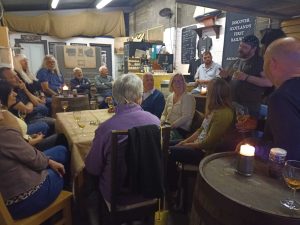
That was fun. In something of a departure from our usual fare, this weekend featured our inaugural gin tasting session, in collaboration with our good friends at the 1722 Waggonway Heritage Centre.

Five carefully selected Scottish gins, each served with a recommended mixer and some of yr. corresp.’s signature well-informed chat. (We initially picked out four bottles, and then a very welcome last-minute donation of a fifth gin forced me to recompose my entire planned spiel.) Since this was a beginner-level session I concentrated on modern London Dry-style gins with a local Scottish twist, but of course I had to include Lindores for the historical aspect, given the venue.

We wisely dispensed with all the “gin o’clock” and “let the evening be-gin” gags in the first five minutes and thus could get down to some serious gustatory experiencing. I walked everyone through the usual tasting process, using dehydrated fruit garnishes so that the flavours would percolate into the spirit over the course of a few minutes.

It wouldn’t be a proper dramb tasting session unless I managed to hydrolyze some esters somewhere along the line.

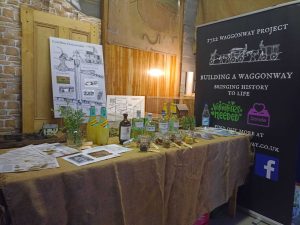
gin display
My epic gin display table

And then it was into my favourite part of the evening: Laboratory Tyme! Newly inspired to fresh creative heights and a deeper understanding of the complexities of flavour profiles and pairings, everyone descended upon the bar to develop their own combinations. Some of the results were excellent. I was particularly fond of a few examples that completely recontextualized the original spirit.

I wouldn’t normally recommend an activity like this with a whisky tasting session—particularly at an introductory level, where people are frequently looking for something a bit more regimented. But the more open nature of gin really lent itself to a more experimental kind of event, combined with the fact that I was running a gin evening for the first time.

One thing I learned very quickly, very early on in my career as an experience developer, was that you have to trust people. It’s their event and they know how to enjoy themselves. I’m there to provide the expertise and enough guidance to let the evening run, but—crucially—no more than that. This was a great example of a session filled with great people who really turned the night into their own.

One new lesson that I picked up as a result: spending three days dehydrating grapefruit wheels1Ten hours per batch inna domestic oven. A proper dehydrator is going on the amazon wishlist. was totally worth it, but unless it’s for another charity fundraiser, next time I’m charging extra.

Here’s the running order:

Lindores Aqua Vitae

Lindores aqua vitae

This common ancestor to both whisky and gin has a fascinating history and a really unique, medieval, medicinal flavour profile, herbal and warming.

Key botanicals: cleavers, sweet cicely

Recommended serve: orange wheel and ginger ale

Our findings from Laboratory Tyme: the recommended serve was deliciously warming but it got everyone thinking of Christmas. For midsummer, keeping the orange but substituting tonic for the ginger ale made for a much lighter, zingier drink.

The Botanist gin

The Botanist

Bruichladdich’s adroit take on the London Dry, with a whole ton of botanicals crammed in there.2Alongside nine of the more traditional gin botanicals they have twenty-two local ones. They employ two full-time foragers at Bruichladdich and I can’t say I’m surprised. A modern classic.

Key botanicals: most of them, but elderflower, gorse, meadowsweet, and mugwort stood out

Recommended serve: pink grapefruit and tonic

Our findings from Laboratory Tyme: a sprig of rosemary really added another layer to this one.

caorunn

Caorunn

A much wetter style for contrast, but still technically a London Dry. Hugely popular amongst the group.

Key botanicals: rowanberry and Coul Blush apples

Recommended serve: red apple and tonic

Our findings from Laboratory Tyme: as well as adding a frisson to the drink, the gin-infused apple slices were brilliant afterwards.

Edinburgh Seaside gin

Edinburgh “Seaside”

Long has this been a favourite at casa dramb, so it was a very pleasant surprise to have this added to the lineup at the last minute (thanks Ed!). A great choice, too, since it was brand new to a lot of folk at waggonway. Beautiful fresh summery coastal notes, perfect for the location.

Key botanicals: bladderwrack, scurvy grass, and ground ivy

Recommended serve: tonic, grapefruit and thyme

Our findings from Laboratory Tyme: we started with a more traditional lime-and-tonic pairing, which was beautiful as always, but the addition of fresh thyme was a gamechanger.

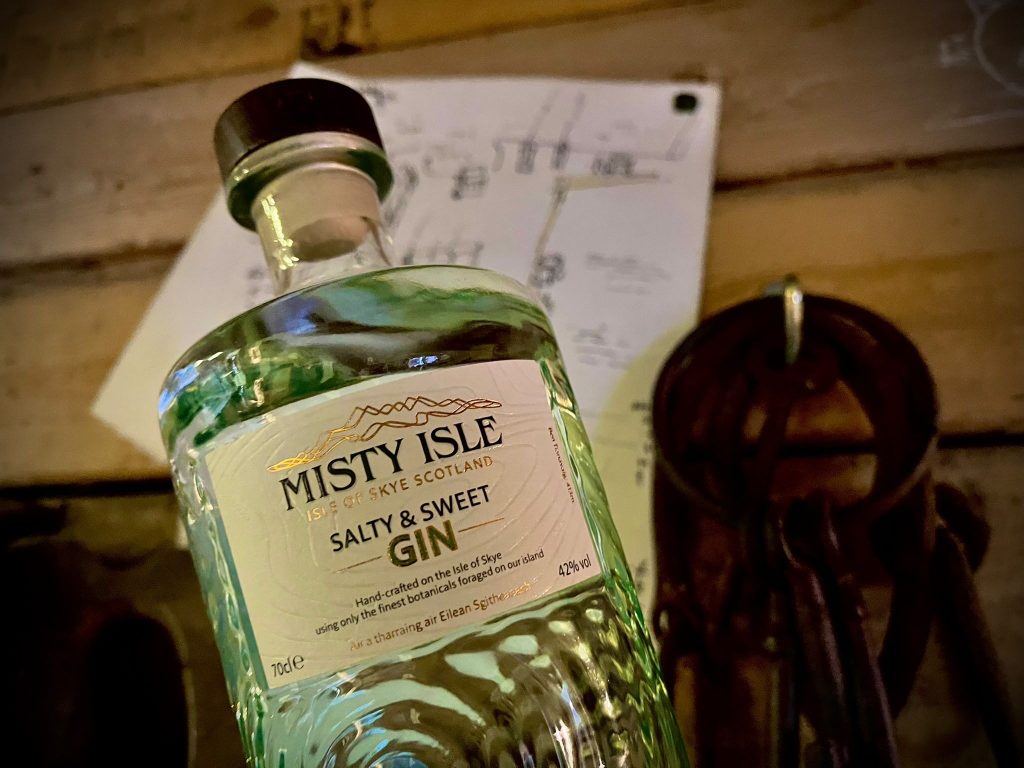
Misty Isle "salty & sweet" gin

Misty Isle “salty & sweet”

Given the importance of the local salt panning industry to the history of the Waggonway, and the heritage project’s ongoing ventures in preservation of the craft, we felt it was only right to include something salty for dessert. And everybody bloody adored it.

Key botanicals: blueberries, meadowsweet, and sea orache

Recommended serve: Scottish tonic and lemon peel

Our findings from Laboratory Tyme: bitter lemon. Suddenly all the sweet notes were highlighted and the whole thing tasted like a lemon posset. Gorgeous.

It turned out to be a lot more difficult than I expected to source bitter lemon for the mixers table. It seems to be falling out of fashion in the smaller and medium-sized supermarkets, as if it’s a relic of the 1980s. Certainly in my entire quarter-century career as a bartender, I’ve never once served a bitter lemon alongside a gin—only ever as one half of a St Clements. Given how marvellously it worked with several of this evening’s bottles (especially the Misty Isle), I say it’s time to bring it back. Does anyone know if bitter lemon counts as one of your five-a-day?

pajh in gin mode
pajh in full declamatory gin-fuelled style

Coming up next on the Waggonway’s events calendar is this talk by Elizabeth Ewan, For Whatever Ales Ye: Women and Brewing in Sixteenth-Century Scotland, which I’m really looking forward to. And as ever I’m available to book for your own event if you’d like to join the party.

Footnotes

  • 1
    Ten hours per batch inna domestic oven. A proper dehydrator is going on the amazon wishlist.
  • 2
    Alongside nine of the more traditional gin botanicals they have twenty-two local ones. They employ two full-time foragers at Bruichladdich and I can’t say I’m surprised.

Holyrood Noir

No, it’s not the latest novel from Ian Rankin. It’s just a quick note about the new range from Edinburgh’s own Holyrood distillery: the Noir “trilogie“.

I last visited the distillery a couple of years ago—completely neglecting to take any photographs while I was there. At the time, they were doing some really exciting experimental stuff, distilling with different yeasts and malts. There were some fascinating and unconventional flavours coming through in their new-make spirit, but none of it had had the time to turn into whisky yet.

That fateful day has now arrived, and the first three more experimental releases are now out. I’ve been very impressed with their more traditional expressions to date, but this is new and weird and exciting. I’ve heard good things already about the bordeaux yeast whisky, and this week I was on one of my all-too-rare-these-days visits to dramb’s very good friends at the celebrated Bow Bar, so it was time to dive in.

Holyrood Noir premier cru
A dram in its natural habitat

Here we go then with the Holyrood Noir premier cru yeast. I’d mentioned it to the barman specifically as something I was hoping to try, so the absolute darlings had popped downstairs to fetch me a fresh bottle. This means that a) they’ve had a bottle and sold out already, and b) the dram I got was still at cellar temperature when I got it.

Immediately, the champagne yeast brings all those marvellous biscuity, buttery, croissanty notes to the nose. All the memories of my WSET champagne training came flooding back. (We blind-tasted with a bottle that was clearly of exceptional provenance, only to be told at the end that it was Tesco’s own brand. Good champagne is where you find it. Since then I’ve rarely drunk any other kind, and I tend to drink it out of a mug just to frighten the traditionalists.)

A pronounced hint of raspberry ripple. I could sit here all day, with my nose shoved in the glass, reminiscing. As the glass came up to room temperature in my hands, the whisky did what champagne does when it goes flat: the carbonic acid dissipated, some of the sour tang wafted away, bringing a suggestion of warmth and cosiness which just highlighted the biscuitiness from the whisky. A touch of hot tea, but that might be an association based on the way I drink champagne from a mug.

Toffee and fudge on the palate. Smooth, almost too smooth—I was just deciding that I could happily live on this when I looked at the ABV. A drop of water makes some crystal sparkles coalesce out of the liquid and then the raspberry ripple flavours come back stronger, this time with a hint of pear.

I absolutely adored this whisky and I will defend to the death my use of the word ‘biscuitiness’. Get that weak-ass wavy red line out of here, Wordpress.

I can see myself enjoying several more of these but I’m already looking forward to whatever the boys and girls of Holyrood come up with next.

In which freedom and whisky gang thegither

A lovely time was had by all at the Burns Night whisky tasting held with my good friends at the 1722 Waggonway Project, a fantastic local history museum here in sleepy East Lothian. A few carefully selected drams tied to aspects of the Bard’s life, paired with some of his poetry.

I’ve never been much of a Burns fan. He’s Scotland’s national poet but I’ve always been more of a McGonagall man. But doing the research for this tasting session, plus some encouragement from our in-house declaimer Gareth Jones, has made me warm to him a great deal.

I still can’t stand the standard Habbie though. Awful verse form. Even McGonagall knew to stay well away.

Whiskies selected by yr. humble corresp. for this event were:

Three old favourites in the middle, but both the Lochlea and the Edradour #2 were brand new to me. I didn’t even know that Edradour had built a second distillery, but there’s no better time to find out than when they’ve just released their first bottling.

And while I’m confident in my ability to select an appropriate dram, I was completely blown away by the quality of these two.

pajh with Lochlea

This grin is the grin of a man trying Lochlea’s core expression for the first time. Sources claim that I stayed like this for about five minutes.

There was candlelight, a log fire, camaraderie, and some excellent poetry expertly recited. There were some terrible jokes and some great laughs. And there were a series of bloody good drams. If you’re looking for something similar for your own event, you know where to find me.

Black Bottle

Good old reliable Black Bottle.

This stuff used to be ideal if you wanted a decent punch of smoke onna budget. It’s readily available in supermarkets, but with a distinct peaty authority to it. The scuttlebutt at the time was that over 50% of the components were Islay whiskies, and it had a unique character that you couldn’t find in any other blended whisky at a comparable price point.

Alas, that’s no longer the case. After a buyout in 2013, they reformulated the blend to bring it back, they said, closer to the flavour profile of its 1879 roots. Not having tried the original expression, which would have been 140 years old at the time, I can’t speak to how well they might have succeeded onna technical level. I can only tell you how it tastes today, and frankly, I don’t wanna.

There’s not a lot to say really. It tastes of whisky. If you strain really hard you can detect a little heathery note, and a little bit of smokiness, but the overwhelming impression is of cheap industrial-grade ethanol. It’s alright I suppose, but it’s nothing to write home about, and certainly nothing I could write a blogpost about. (Others have tried, and they’ve come to broadly similar conclusions to my own.) It’s worth mentioning that I’ve tried it with ice and without, with coke and cream soda, and in none of those cases did it distinguish itself in any way.

(It was, however, amazing inna hot toddy. Relevant blogpost coming soon!)

About half of the whisky industry right now

I’m disappointed but not surprised. The industry has been tending in this direction for a while now, particularly at the cheaper end of the market. The constant drive to maximize profits at all costs has led us here, to appeal to the maximum number of potential consumers: towards ever more generic and insipid whiskies with no character.

It’s whisky production by spreadsheet, and I’ve always hated it. Lagavulin didn’t get where they are by making a whisky that appeals to housewives and teenagers. They made a balls-to-the-wall peat bomb with full knowledge that by doing so they were alienating a vast section of the market. But the people who like it, love it; and the people who don’t like it were probably going to buy vodka anyway. Black Bottle have fallen into the trap of trying to make everyone like them, which means that absolutely no one will love them.

When I run my tasting sessions I usually make it clear, up front, that you’re probably not going to like all of the whiskies I’ve carefully curated for you. You already know what you like and you don’t need me to tell you. What you’re going to do is try a bunch of these drams and I guarantee that they will all be interesting. My job inna tasting session is to provide you with an experience. If all you want to do is get drunk, then you can do that by yourself.

In my previous job I ran into problems like this all the time. The manager would buy in lots of whiskies that he liked. He would refuse to buy ones that he didn’t, even if they were fascinating and sparked brilliant discussions among the tasting groups. He decided that he didn’t want it and that was good enough for him. I was left with the prospect of telling my groups: “here are a selection of whiskies that my boss, who isn’t here tonight, likes to drink”. Those sessions don’t get people talking, don’t get people engaged with the concept of whisky tasting, and they’re not the kind of sessions that people remember decades later. They’re sessions that get you three stars on Tripadvisor, not five.

Everything in moderation, including excess.

–pajh’s rules for life, #45

Whisky’s not about moderate experiences. A good whisky should divide opinion and possibly start a fistfight or two. I trust my clients to make up their own minds about their own preferences: all I’m doing is offering up some options.

Anyway, Black Bottle is a great whisky for you if you like to drink whisky but not have it taste of anything, and also if your soul is dead to the rich panoply of human existence.

Currently on offer for about £20 in quite a few supermarkets!

A little bit of Welsh whisky action

We concentrate on scotches here at dramb, but not exclusively. And this week I find myself on the coast of North Wales, sharing a caravan with my family.

When travelling, wherever one goes, it’s always a good idea to try the local tipple. For Wales, Penderyn has been gaining accolades left and right since they established themselves, but I’ve never really developed a taste for it.1I tried their first expression when it had only just come out, and they hadn’t got it quite right yet, and I wasn’t impressed. Aber Falls, though, is a distillery I know almost nothing about, but I’ve frequently found their whisky on special offer in the supermarket, and I’ve come to regard it as a reliable old standby—which is a pretty impressive feat in just eight years.

So, while wandering along Llandudno Pier the other day2At 700m, it’s Wales’ longest pier and the fifth longest in the UK!, as one does, I was pleased to find amongst the stalls a tiny little shop offering tasters. We had a quick swig of their gin, which I’m going to have to investigate more thoroughly in the future3Beautifully balanced and citrusy with some salty grapefruit notes, a great seaside gin., but naturally I was most interested in the whisky.

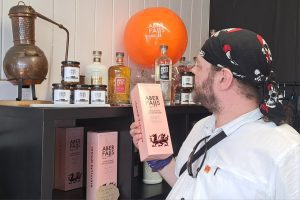
pajh checking out the merchandise
Checkin’ out the merchandise.

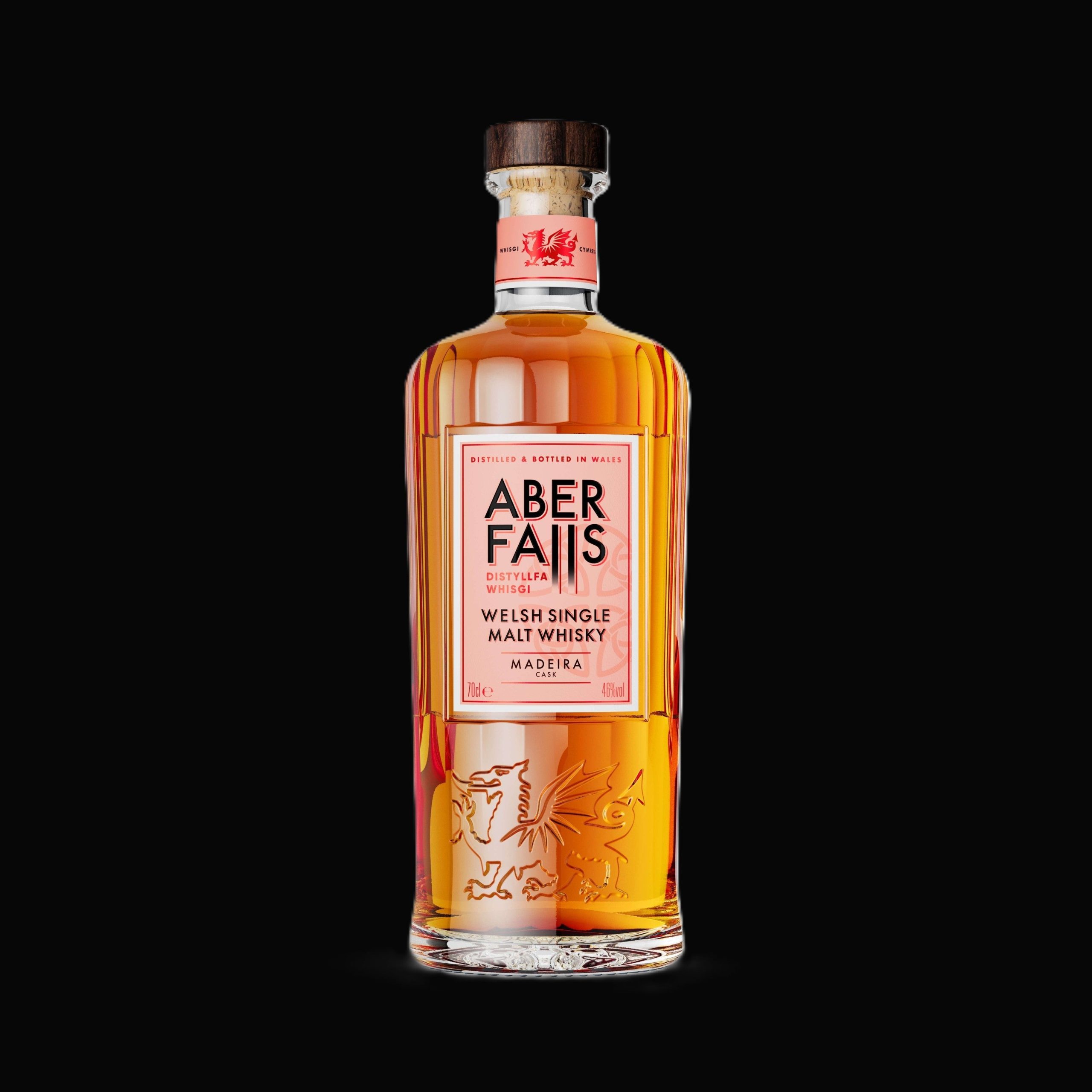
And they’ve got a new one! Just released, the new madeira cask finish is a bit of a departure for Aber Falls, and the lovely lassie in the shop was justifiably quite excited to show it off for me. And then I bought a bottle without hesitation.

Of course, it wouldn’t be a proper Aber Falls tasting unless I could compare my new acquisition against their core spirit. Also, I’m British and thus genetically unable to ask for free stuff. Fortunately, the lassie in the shop gave me super-secret inside information on how to acquire Aber Falls at sale prices. Apparently, when you’re in Tescos and it doesn’t look like it’s available, ask anyway—it’s supposed to be available at Clubcard prices all the time, but Tescos might not make it obvious.

Fortunately (again), even that wasn’t necessary. We dropped into Sainsburys on the way back and the Nectar card offer was even cheaper than I’d seen it elsewhere. So now I have two excellent Welsh whiskies for a comparison tasting.

There is one further consideration when attempting a tasting session inna caravan on the north Welsh coast. The glassware in these caravans is never of what you might call the highest calibre. And I’ve recently discovered that I have sensory issues that require me to have a nice, chunky, heavy-based glass that I can hold properly. Sainsburys to the rescue once again.

This is why we have expense accounts, people.

pajh inna caravan with two bottles of Aber Falls.
As you can see, I’m having a lovely time here in Wales.

So here’s a look at both of them:

Aber Falls single malt Welsh whisky

Salt and pepper with something spicy, like cardamom. Bourbon vanilla and a smokey hint, very subtle, from the wood. A sweet note of canned peaches in syrup.

Aber Falls single malt Madeira cask

It’s 7% higher ABV and it makes that very clear on the nose. The sweetness from the madeira just serves to exacerbate the spicy note, but there’s a really strong hint of candied, roasted hazelnuts.

I love them both of course, but while the core expression is an absolute banger for a supermarket special, the new madeira cask is something to break out on some sort of important occasion. Fortunately (again), I’m on holiday this week. Cheers.

Footnotes

  • 1
    I tried their first expression when it had only just come out, and they hadn’t got it quite right yet, and I wasn’t impressed.
  • 2
    At 700m, it’s Wales’ longest pier and the fifth longest in the UK!
  • 3
    Beautifully balanced and citrusy with some salty grapefruit notes, a great seaside gin.

Shackleton blended malt

Shackleton is back on offer in Co-op, and it’s still one of the finest whiskies you can imagine getting for £19.50.

Some years ago I went to the Whisky Stramash at the Surgeon’s Hall, and this new-at-the-time release was, for me, one of the standout drams of the entire event. A good whisky should tell a story, and this has one of the better ones.

In 1907, Ernest Shackleton (not yet Sir) and the crew of the British Antarctic Expedition buried a cache of supplies under the ice at the shore party’s overwinter hut. Shackleton himself is a fascinating character. Born in the wrong century, he should have been a buccaneer, swashing buckles and shivering timbers across the Spanish Main or some other such thing. Growing up in late-Victorian suburban London, he had to make do with the next best thing, which was becoming one of the greatest explorers of his age.

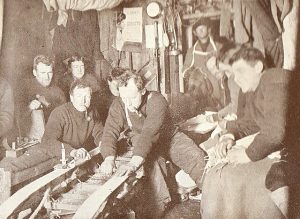
A group of explorers from Shackleton's ''Nimrod'' expedition, 1907-09, in the Antarctic hut at Cape Royds
The Nimrod Expedition inside the hut at Cape Royds. Note the advert for ladies’ corsets on the back wall. Gotta keep the troops’ spirits up.

(Between epic expeditions he contented himself with a series of hare-brained moneymaking schemes of varying degrees of failure. At one point he ran a tobacconist’s shop around the corner from my old hotel.)

By 1907, the only bit of the planet that the British Empire hadn’t already stuck a flag in was the Antarctic, so that was the place to go. The climate there was significantly less hospitable than it would have been were Shackleton born early enough for privateering across the Caribbean, but he was a man who worked with what he had. And what he had included three cases of Mackinlay’s Rare Old Highland Malt Whisky.

A century later, these three crates of whisky were rediscovered frozen in the ice. So after extensive negotiations they were carefully dug out of the ice, defrosted, and flown back to civilization in what I understand to be contravention of several international treaties1It’s basically illegal to take anything out of Antarctica. Special arrangements were made, which I understand involved getting the whisky personally flown out on the distillery manager’s private jet.. Painstakingly recreated from samples of the original spirit, modern Shackleton’s whisky was released to some fanfare in 2011.

This is what I discovered at the Whisky Stramash. The specific single malt was no longer available2The Glen Mhor distillery was closed in 1983 and demolished 1986., so the modern version was a blended malt that carefully recreated the original flavour profile. Limited edition, sold inna wooden crate stamped BRITISH ANTARCTIC EXPEDITION and packed with straw as the original ones would have been. It cost me £100 and at the time was the single most expensive bottle of whisky I’d ever owned. So naturally I was too afraid to open it, and a few years later it got lost during a house move.

Don’t be like me, kids. Whisky is for drinking.

The fact that it’s now available most of the time for twenty-five quid in Asda ought to make me angry. It doesn’t, because it’s a bloody beautiful dram and I’m genuinely glad that it’s getting wider dissemination of the kind that it definitely deserves.

Journal of the Institute of Brewing, vol 117, issue 2, Jan 2011

I recently discovered the original academic paper from when they scientifically analyzed the samples as part of the recreation process. It talks a lot about congeners and esters and phenols, concepts that I don’t understand nearly as much as I’d like. It all sounds fascinating but I was never good at chemistry at school.3When I’m making cocktails, I take care to describe what I’m doing as “applied chemistry”. What I found particularly interesting was that, after all this time, using things like gas chromatography and mass spectroscopy, they’ve been able to determine things as specific as the type of peat that was used (Orcadian, from the Isle of Eday) and the barrels used for maturation (first-fill American oak sherry casks, for more than five years). The things you can do these days. They’ve then been able to correlate their analyses with the historical records and work out, hypothetically, which of these Edwardian booze advertisements were telling porkies.

The results presented here significantly change our perception of the quality and character of Scotch malt whisky produced over 100 years ago. Malt whisky from this period was generally regarded as robust, peaty and too ‘heavy’ in style for ordinary consumption. Our analysis however describes a surprisingly light, complex whisky, with a lower phenolic content than expected.

Sensory and Chemical Analysis of ‘Shackleton’s’ Mackinlay Scotch Whisky4Pryde, J., Conner, J., Jack, F., Lancaster, M., Meek, L., Owen, C., Paterson, R., Steele, G., Strang, F. and Woods, J. (2011), Sensory and Chemical Analysis of ‘Shackleton’s’ Mackinlay Scotch Whisky. Journal of the Institute of Brewing, 117: 156-165. https://doi.org/10.1002/j.2050-0416.2011.tb00455.x

The general takeaway from the article, and from most reviews I’ve read, is that historical whisky was traditionally very heavy and peaty, whereas this Mackinlay brand is comparatively light and fresh, much more like a modern whisky. I’ve not been able to find any records describing how much personal interest Shackleton took in the specific type of booze he took along with him onna journey to the very ends of the Earth. But I like to think that, in this as in so many other things, he was a trailblazer.

Recently I’ve discovered that Shackleton whisky tastes, if anything, slightly better out of a hipflask. I can only speculate that this is exactly the kind of criterion valued by an Edwardian gentleman officer-adventurer. And I can confirm that it’s just the thing you want when you’re immersed in bloody freezing water.

pajh up to his knees in the Firth of Forth, making the best of it

I love living here, but sometimes going paddling at the beach is a chore.

Footnotes

  • 1
    It’s basically illegal to take anything out of Antarctica. Special arrangements were made, which I understand involved getting the whisky personally flown out on the distillery manager’s private jet.
  • 2
    The Glen Mhor distillery was closed in 1983 and demolished 1986.
  • 3
    When I’m making cocktails, I take care to describe what I’m doing as “applied chemistry”.
  • 4
    Pryde, J., Conner, J., Jack, F., Lancaster, M., Meek, L., Owen, C., Paterson, R., Steele, G., Strang, F. and Woods, J. (2011), Sensory and Chemical Analysis of ‘Shackleton’s’ Mackinlay Scotch Whisky. Journal of the Institute of Brewing, 117: 156-165. https://doi.org/10.1002/j.2050-0416.2011.tb00455.x

Dramming home for Christmas

Glendronach and Smokehead Rebel rum cask on my kitchen table, ready for drinking.
Tonight’s entertainment is brought to you by these drams and the fact that it’s time to get all the bloody Xmas cards written.

Having (finally!) sorted out that irritating problem with the website layout (as mentioned inna previous blogpost), I thought that I’d get things kicked off properly with a twofer. ‘Tis the season and all that, winter is closing in and the days are getting shorter, so I was in the mood for something really meaty. By a stroke of luck I had occasion to drop into the excellent Loch Fyne Whiskies on Cockburn Street, and they had this on special offer.

Glendronach Original 12yo

Dense and rich, clearly with a lot of sherry influence going on. The label talks about PX and Oloroso casks, and it’s pretty obvious from the first sniff. It smells like Christmas—which suggests that I was right when I picked this one out. Lots of dried fruit and a prominent acetone note, giving that really strong pear drops vibe. Behind that there’s a big hit of Xmas-themed spices: cinnamon and allspice and everything nice.

I’d had a pretty stressful day and I was very, very much in the mood for a drink when I got home. This whisky was exactly the sort of thing that I needed. I could happily sit here with my nose in the glass for a good long time while my natural bonhomie returns. (Yes, I do have a natural bonhomie. It’s just that very few of you ever get to see it, which, frankly, is on you.)

Adding a drop of water softens the spiciness and brings out a very sweet note—but it’s the kind of confectioner’s sugar note that I’d expect in grain whisky. Because of the acetone vibe from before I can’t help but think of licking the dust off the outside of a pear drop. No, wait, it’s travel sweets. Remember those? They came inna little round tin and you could get them at motorway service stations. When I was young I always preferred the dust in the bottom of the tin.

Despite that additional lightness there’s still a lot of complexity in this dram, deep rich raisiny notes from the sherry, and some hints of oaky vanilla. It improves on pouring a second glass.

I’m feeling a lot better now.

Smokehead “Rebel” rum cask finish

I got this bottle from work. My boss has this notion that I’m a fan of the smoke bombs, which isn’t remotely true, but I think he gets it from the fact that I’m always asking for something peatier to go on the range that we have there. I’m not asking that because I want to drink it. I’m asking on behalf of the guests. This seems to have given me a reputation as a smoke fiend, which isn’t my usual style at all, but I do appreciate a smoky one on occasion.

Let’s assume that this is one of those occasions. Smokehead is, typically, a beautiful proper single malt that comes from an undisclosed Islay distillery. (Last time I checked, the scuttlebutt suggested that it was Ardbeg, 10yo vatted with a little bit of 12). They make great whiskies but, for whatever reason, they won’t tell you where it comes from. I can only presume that this is something to do with the marketing department.

In any case, what they do at Smokehead is heavily peated face-melters that can carry a “single malt” label and still be generic enough to go well with a mixer. And this expression is one where they seem to have lost their way a bit. If anything, it’s too good.

A rum finish would normally give a strong brown sugar note on the nose, but this one tempers it with a fruitiness that I’d normally expect from a very inland kind of Highland malt—that kind of rum-and-raisin ice cream kind of thing that Balvenie used to do so well. My first impression was of chocolate, lots and lots of chocolate. There’s a lot of smoke obviously, but it’s not overpowering and it just serves to highlight a bunch of other flavours that are going on in there. Drunk neat there’s an odd kind of thin, sharp line to the smokiness, but once you add water all the sweetness comes out and the astringency fades into the background.

Smokehead Rebel and a glass of Smoke-an'-Coke. I do this for you.
I hope you folks are appreciating this.

On the bottle, there’s a line on the tasting notes about “bursting with fiery peat smoke, burnt marshmallows and softened with caramelised fruit”. When I first tasted this I wasn’t getting any of those things, but this evening, sitting and spending a bit of time with this one, I’m definitely getting some marshmallow once the water’s opened it up. In my opinion a good smoky whisky should make you think of campfires, and this one goes beyond that and tastes like s’mores.

It’s almost too good to drink with a mixer. But I’m writing this review and this is a Smokehead so it’s only right that I go all the way and test this properly for you. So, against my better judgement perhaps, I went and got some coca-cola.

It works as a drink with Coke—and that’s really all I’ve got to say. It’s nice. A line of the smokiness comes through. It plays nicely with the cola flavours. But it’s better drunk on its own. This is one that has enough going on by itself not to need a mixer. And that’s something that I would rarely say about a generic Islay whisky, so I suppose that from me it comes as high praise.

Now I’m off to try it again neat, just to see what else is in there.