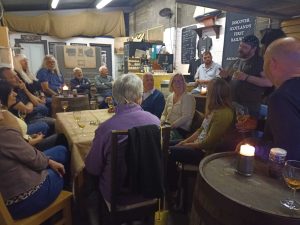
That was fun. In something of a departure from our usual fare, this weekend featured our inaugural gin tasting session, in collaboration with our good friends at the 1722 Waggonway Heritage Centre.
Five carefully selected Scottish gins, each served with a recommended mixer and some of yr. corresp.’s signature well-informed chat. (We initially picked out four bottles, and then a very welcome last-minute donation of a fifth gin forced me to recompose my entire planned spiel.) Since this was a beginner-level session I concentrated on modern London Dry-style gins with a local Scottish twist, but of course I had to include Lindores for the historical aspect, given the venue.
We wisely dispensed with all the “gin o’clock” and “let the evening be-gin” gags in the first five minutes and thus could get down to some serious gustatory experiencing. I walked everyone through the usual tasting process, using dehydrated fruit garnishes so that the flavours would percolate into the spirit over the course of a few minutes.
It wouldn’t be a proper dramb tasting session unless I managed to hydrolyze some esters somewhere along the line.
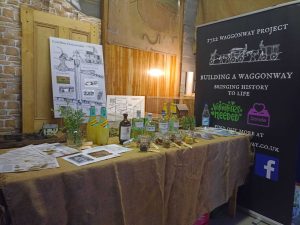
And then it was into my favourite part of the evening: Laboratory Tyme! Newly inspired to fresh creative heights and a deeper understanding of the complexities of flavour profiles and pairings, everyone descended upon the bar to develop their own combinations. Some of the results were excellent. I was particularly fond of a few examples that completely recontextualized the original spirit.
I wouldn’t normally recommend an activity like this with a whisky tasting session—particularly at an introductory level, where people are frequently looking for something a bit more regimented. But the more open nature of gin really lent itself to a more experimental kind of event, combined with the fact that I was running a gin evening for the first time.
One thing I learned very quickly, very early on in my career as an experience developer, was that you have to trust people. It’s their event and they know how to enjoy themselves. I’m there to provide the expertise and enough guidance to let the evening run, but—crucially—no more than that. This was a great example of a session filled with great people who really turned the night into their own.
One new lesson that I picked up as a result: spending three days dehydrating grapefruit wheels1Ten hours per batch inna domestic oven. A proper dehydrator is going on the amazon wishlist. was totally worth it, but unless it’s for another charity fundraiser, next time I’m charging extra.
Here’s the running order:
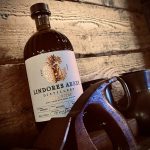
Lindores aqua vitae
This common ancestor to both whisky and gin has a fascinating history and a really unique, medieval, medicinal flavour profile, herbal and warming.
Key botanicals: cleavers, sweet cicely
Recommended serve: orange wheel and ginger ale
Our findings from Laboratory Tyme: the recommended serve was deliciously warming but it got everyone thinking of Christmas. For midsummer, keeping the orange but substituting tonic for the ginger ale made for a much lighter, zingier drink.
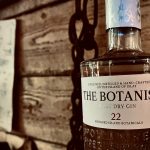
The Botanist
Bruichladdich’s adroit take on the London Dry, with a whole ton of botanicals crammed in there.2Alongside nine of the more traditional gin botanicals they have twenty-two local ones. They employ two full-time foragers at Bruichladdich and I can’t say I’m surprised. A modern classic.
Key botanicals: most of them, but elderflower, gorse, meadowsweet, and mugwort stood out
Recommended serve: pink grapefruit and tonic
Our findings from Laboratory Tyme: a sprig of rosemary really added another layer to this one.
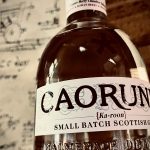
Caorunn
A much wetter style for contrast, but still technically a London Dry. Hugely popular amongst the group.
Key botanicals: rowanberry and Coul Blush apples
Recommended serve: red apple and tonic
Our findings from Laboratory Tyme: as well as adding a frisson to the drink, the gin-infused apple slices were brilliant afterwards.
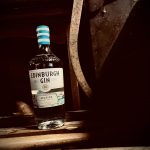
Edinburgh “Seaside”
Long has this been a favourite at casa dramb, so it was a very pleasant surprise to have this added to the lineup at the last minute (thanks Ed!). A great choice, too, since it was brand new to a lot of folk at waggonway. Beautiful fresh summery coastal notes, perfect for the location.
Key botanicals: bladderwrack, scurvy grass, and ground ivy
Recommended serve: tonic, grapefruit and thyme
Our findings from Laboratory Tyme: we started with a more traditional lime-and-tonic pairing, which was beautiful as always, but the addition of fresh thyme was a gamechanger.
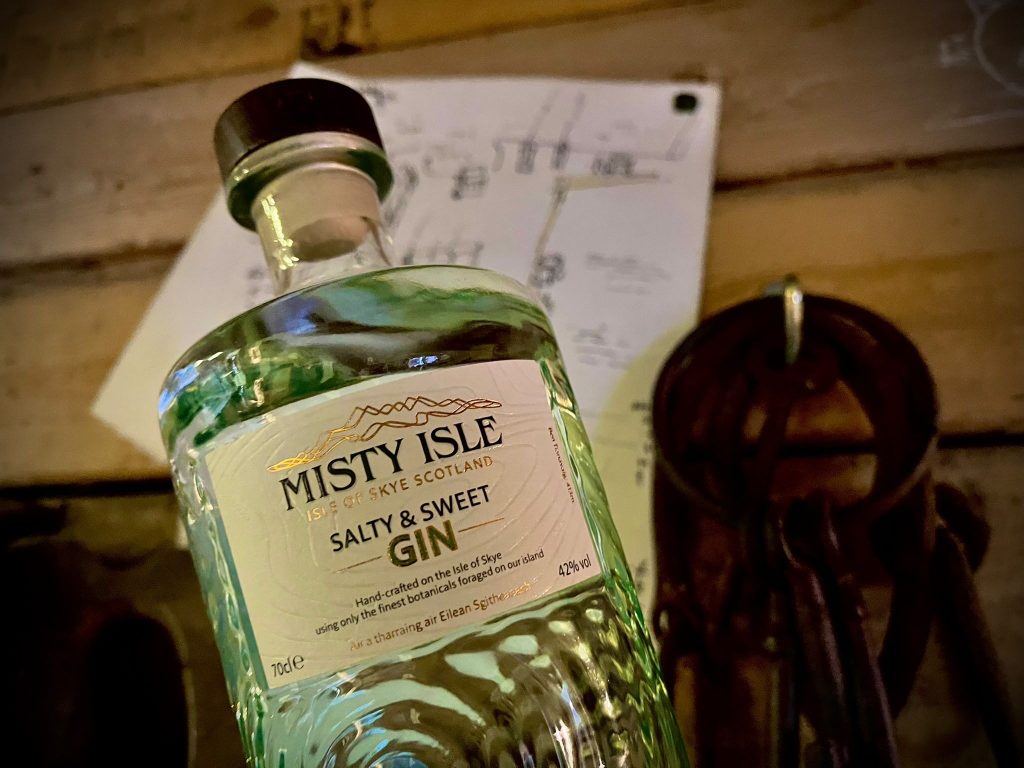
Misty Isle “salty & sweet”
Given the importance of the local salt panning industry to the history of the Waggonway, and the heritage project’s ongoing ventures in preservation of the craft, we felt it was only right to include something salty for dessert. And everybody bloody adored it.
Key botanicals: blueberries, meadowsweet, and sea orache
Recommended serve: Scottish tonic and lemon peel
Our findings from Laboratory Tyme: bitter lemon. Suddenly all the sweet notes were highlighted and the whole thing tasted like a lemon posset. Gorgeous.
It turned out to be a lot more difficult than I expected to source bitter lemon for the mixers table. It seems to be falling out of fashion in the smaller and medium-sized supermarkets, as if it’s a relic of the 1980s. Certainly in my entire quarter-century career as a bartender, I’ve never once served a bitter lemon alongside a gin—only ever as one half of a St Clements. Given how marvellously it worked with several of this evening’s bottles (especially the Misty Isle), I say it’s time to bring it back. Does anyone know if bitter lemon counts as one of your five-a-day?
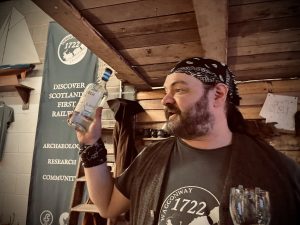
Coming up next on the Waggonway’s events calendar is this talk by Elizabeth Ewan, For Whatever Ales Ye: Women and Brewing in Sixteenth-Century Scotland, which I’m really looking forward to. And as ever I’m available to book for your own event if you’d like to join the party.